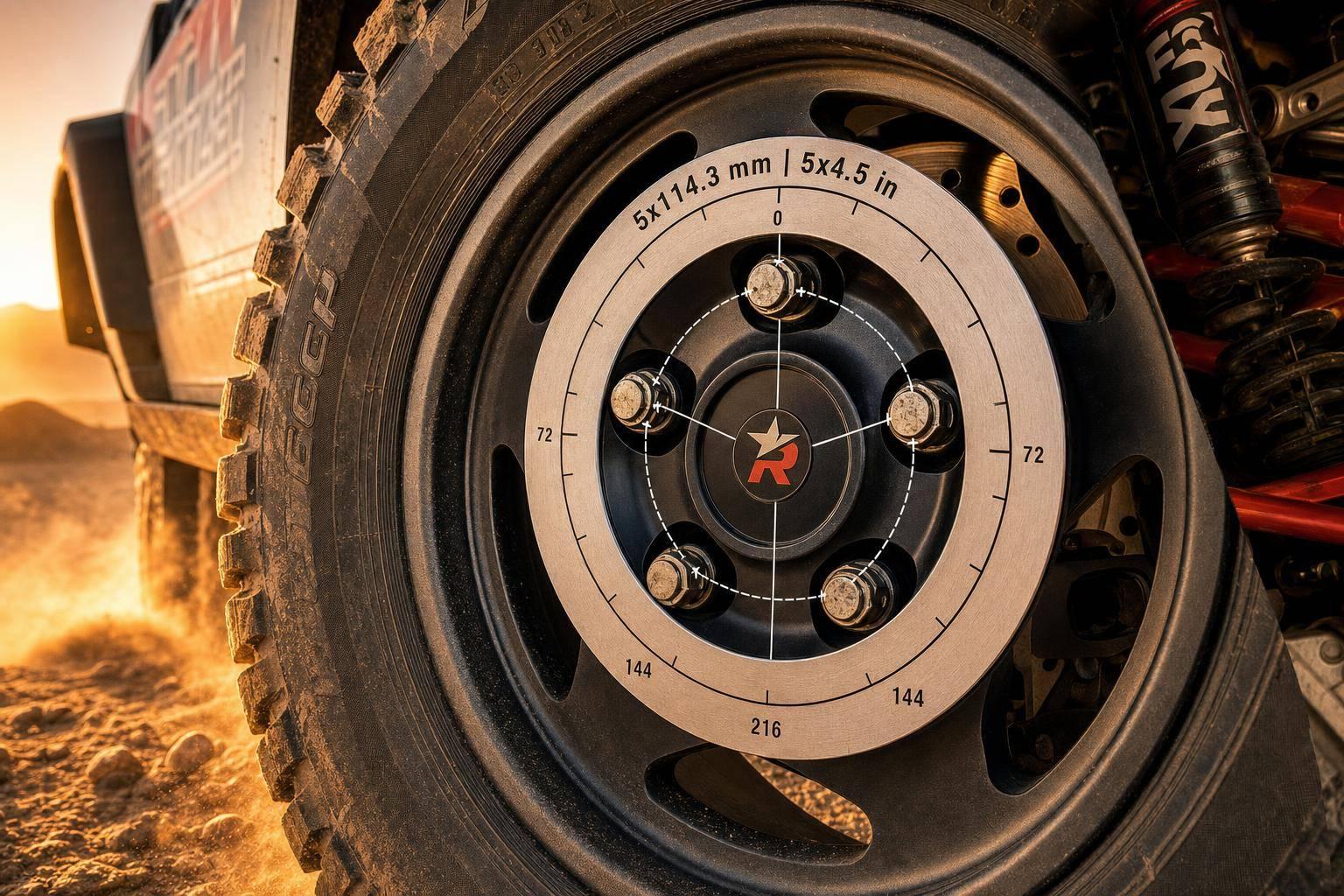
Bolt Pattern Calculator
A bolt pattern calculator helps take the guesswork out of wheel and hub fitment. If you know the number of lugs and the bolt circle diameter, you can quickly turn that measurement into a standard format used by wheel sellers, mechanics, and enthusiasts. That matters when you’re comparing wheels listed in metric sizes with listings shown in inches.
Convert Lug Patterns with Less Confusion
This tool is designed to keep things simple. Enter a measured bolt circle, choose mm or inches, and it returns a clean lug pattern in both units. If you already have a format like 5x114.3 or 5x4.5, the converter mode translates it into the alternate unit and checks for close common equivalents.
Helpful for Wheel Fitment Checks
A reliable lug pattern converter is useful when shopping for wheels, verifying hub specs, or double-checking compatibility before installation. It also explains how to read the pattern itself: the first number is the lug count, and the second is the bolt circle diameter. For odd-lug layouts, measurement is handled a little differently than even-lug setups, so a short guidance note helps prevent mistakes. With a practical bolt pattern calculator, users get fast, readable results without digging through charts or forum posts.
FAQs
How do I read a bolt pattern like 5×114.3?
The first number is the lug or stud count, and the second number is the diameter of the bolt circle. So 5×114.3 means the wheel has 5 lugs spaced on a 114.3 mm circle. In inch format, that same pattern is commonly written as 5×4.5 because 114.3 mm is about 4.5 inches.
Why do some bolt patterns have two different-looking sizes?
A lot of common patterns are simply metric and inch versions of the same measurement. For example, 5×114.3 and 5×4.5 are widely treated as equivalents. This calculator converts the bolt circle diameter into both units and checks for close matches within a small tolerance, which helps you spot standard patterns more easily.
Are odd-lug bolt patterns measured differently?
Yes, odd-lug patterns can be trickier because you usually can’t measure straight across from one stud to the one directly opposite. The general idea is that odd-lug layouts are measured using a slightly different reference point than even-lug layouts. This tool doesn’t require special image-based measurement steps, but it does give a simple note so users understand why odd-lug measurements need a bit more care.
Leave a Reply