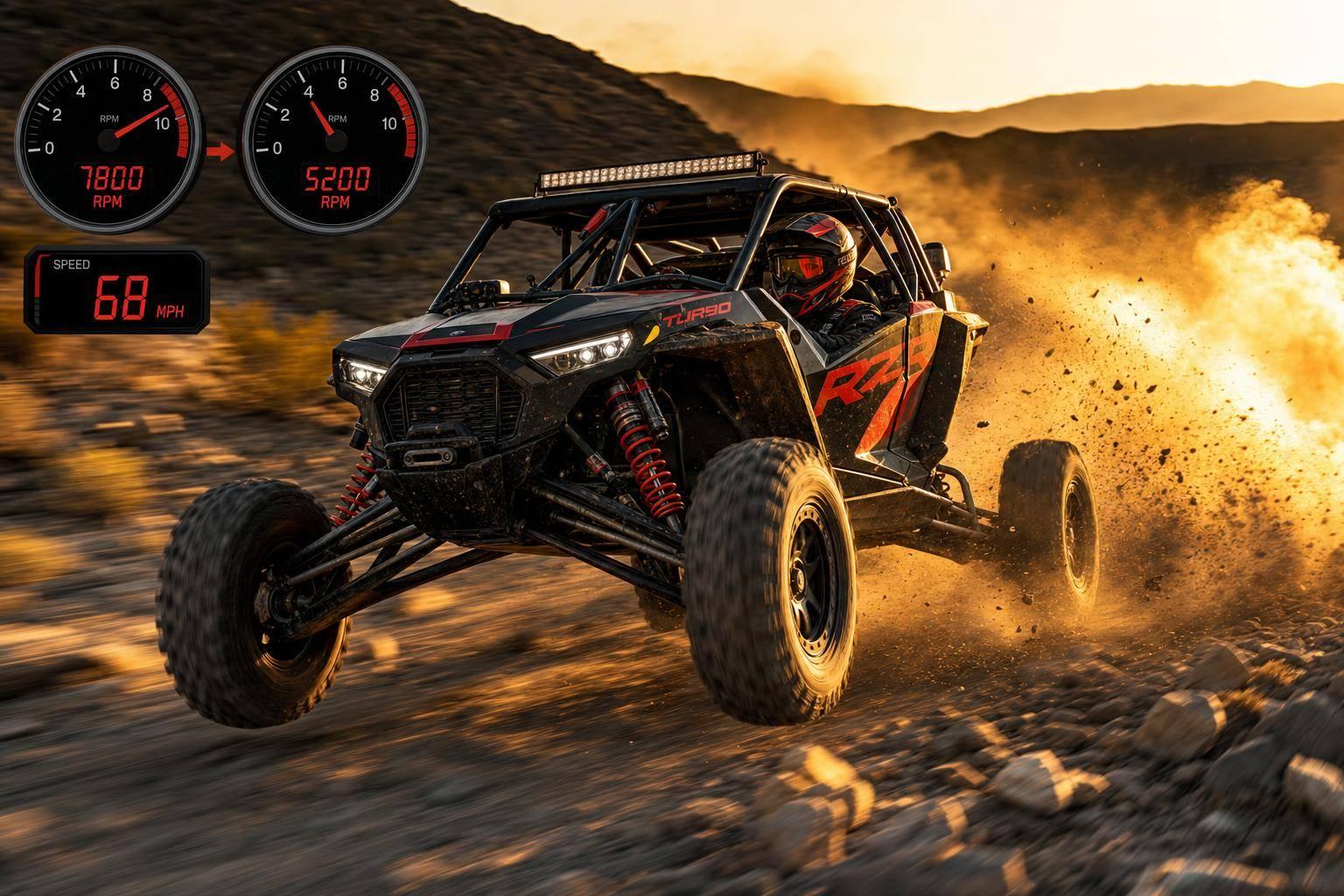
Gear Ratio Calculator for Better Gearing Decisions
A gear ratio calculator makes it much easier to understand how your transmission, final drive, and tire size work together on the road. Instead of guessing, you can quickly see your overall drive ratio, estimate engine RPM at a certain speed, or figure out how fast the vehicle will travel at a given RPM. That’s especially useful for anyone tuning a street car, building a track setup, or comparing gearing changes before buying parts.
Why These Numbers Matter
Small changes in gearing can noticeably affect drivability. A shorter setup can improve acceleration but raise cruising RPM, while taller gearing may calm highway driving and stretch each gear farther. This tool also helps estimate RPM drop after a shift, which is valuable when choosing shift points or evaluating how closely stacked your gears are.
Built for Real-World Automotive Use
This gear ratio calculator is designed to be simple, fast, and mobile-friendly. You can enter your gear ratio, final drive, tire diameter, speed, and engine RPM, then switch between mph and km/h as needed. The result is a practical way to check automotive gearing without doing the math by hand. For enthusiasts who want quick answers, a reliable gear ratio calculator saves time and makes setup decisions far easier.
FAQs
What does overall gear ratio actually tell me?
Overall gear ratio shows the combined effect of the transmission gear and the final drive ratio. It tells you how many times the engine turns for each effective turn of the driven wheels, before tire size is factored into road speed. A higher overall ratio usually means stronger acceleration but higher RPM at a given speed, while a lower ratio generally favors lower cruising RPM and more top-end speed.
Why does tire diameter matter in a gear ratio calculation?
Tire diameter changes how far the vehicle travels with each wheel rotation. A larger tire covers more ground per revolution, which lowers engine RPM at the same road speed. A smaller tire does the opposite. That’s why two cars with the same gearing can show different RPM and speed numbers if their tire sizes are different.
How accurate is the RPM drop after a shift estimate?
The shift RPM estimate is very useful for planning, but it’s still a simplified calculation. It assumes the shift happens at a steady road speed and uses the ratio change between the current gear and the next gear. In real driving, factors like clutch slip, converter behavior, tire growth, and drivetrain loss can affect the exact result. For most street and performance gearing checks, though, it gives a solid real-world estimate.
Leave a Reply