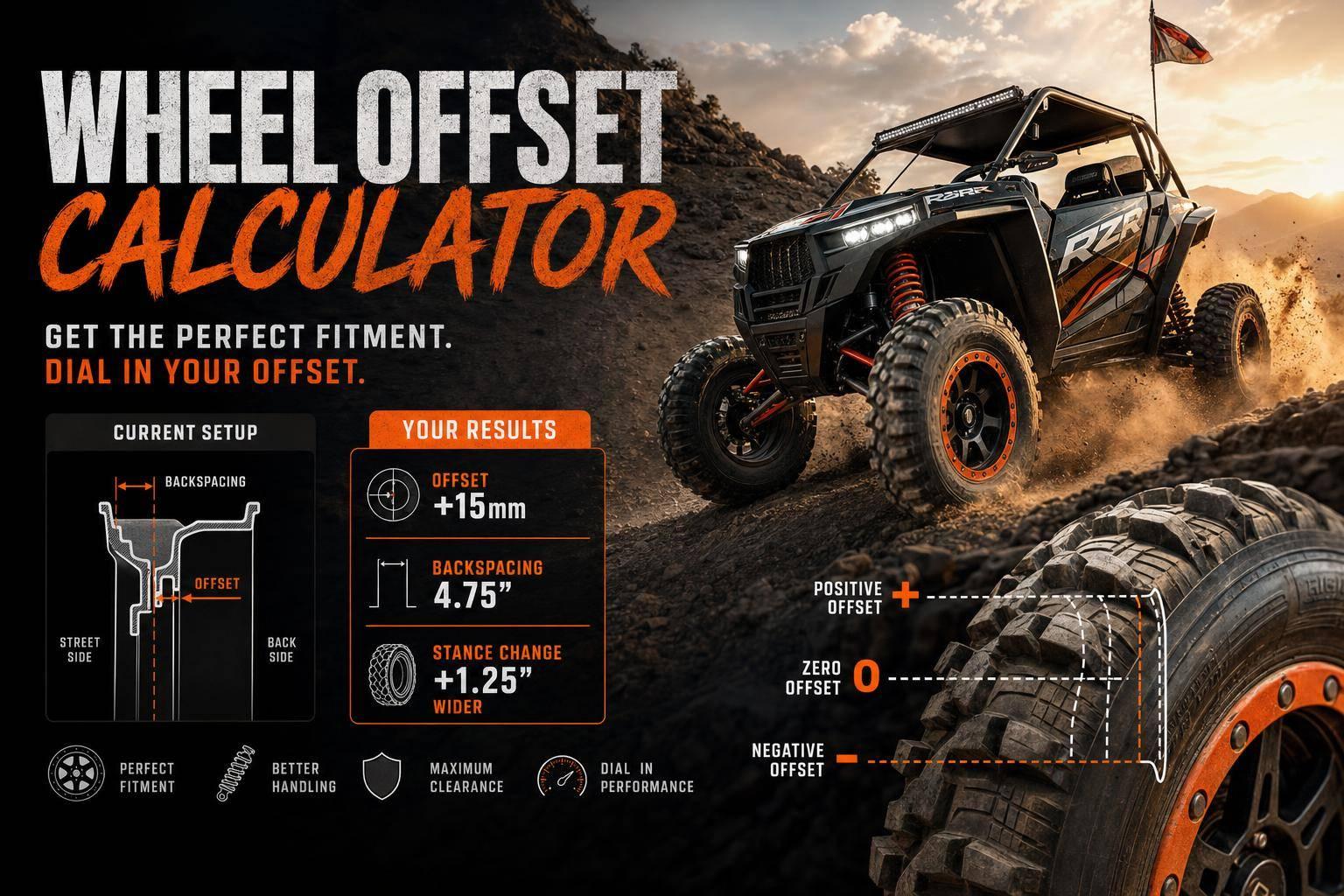
Compare Wheel Fitment with Confidence
A wheel offset calculator helps you see how a new wheel setup will actually sit on the car before you spend money on tires, spacers, or alignment work. Instead of guessing, you can compare your current wheels to a new size and instantly check inner clearance, outer poke, backspacing, and frontspacing.
Why these numbers matter
Small changes in width or offset can make a big difference. A wheel that moves inward may get closer to the strut or suspension components, while one that moves outward can sit more aggressively toward the fender. If you’re adding spacers, the effective offset changes too, which can completely alter fitment.
Built for real-world wheel swaps
This wheel fitment calculator is useful whether you’re planning a subtle OEM-style upgrade or chasing a flush stance. It converts wheel width to millimeters, accounts for offset and spacer thickness, and gives you a plain-English summary that’s easy to understand at a glance.
Faster checks, fewer surprises
If you’ve ever compared wheel specs and still felt unsure, this wheel offset calculator keeps the math simple. It’s a quick way to check how far a wheel moves in or out, so you can make smarter fitment decisions on desktop or mobile.
FAQs
What does a positive inner clearance change mean?
A positive inner change means the new wheel sits closer to the suspension, strut, or inner wheel well than your current setup. In other words, you’re losing inner clearance. That’s not automatically a problem, but it does mean you should check available space carefully, especially on lowered cars or vehicles with big brake kits.
How does a spacer affect wheel offset?
A spacer pushes the wheel outward, which reduces the effective offset of the new wheel. For example, a +35 mm wheel with a 5 mm spacer behaves like a +30 mm wheel. This tool applies that change for you automatically so the comparison reflects the actual installed position, not just the wheel’s printed offset.
Can I use this for negative offset wheels?
Yes. The calculator supports negative offset values, which are common on some off-road, wide-body, and aggressive fitment setups. Just enter the offset exactly as listed, including the negative sign if there is one, and the tool will calculate inner and outer position changes correctly.
Leave a Reply